Mother Blessing Ceremony: Rituals, Timing and How to Plan One
A mother blessing ceremony is a small, ritual-based gathering, usually held around 34 to 38 weeks of pregnancy, where close friends and family honor the expectant mother with readings, beads, candles, and shared wisdom instead of shower games.
A mother blessing ceremony is a women’s circle held late in pregnancy to honor the expectant mother, not the baby, using rituals like bead necklaces, candle lighting, and shared wisdom. After years studying birth traditions alongside doulas and midwives, I’ve seen how this rite of passage calms third-trimester nerves.
If a conventional baby shower feels loud, gift-heavy, or disconnected from the fears you’re actually carrying, this guide helps. You’ll learn what happens, when to hold it, who to invite, and how to plan a respectful, evidence-informed gathering that supports labor, postpartum recovery, and your emotional transition into motherhood.
What Is a Mother Blessing Ceremony?
A mother blessing ceremony is a pre-birth gathering where close friends and family honor an expectant mother as she moves from maiden to mother. Rooted in the Navajo (Diné) Blessingway, it centers emotional support, spiritual preparation, and community rather than gifts, games, and baby supplies.
Most hosts treat it as an alternative to a baby shower, though it can happen alongside one. The focus lands on matrescence, the identity shift of becoming a mother, so guests offer blessings, readings, and symbolic keepsakes she can carry into labor and early postpartum.
Is a Blessing Way the Same as a Mother Blessing Ceremony?
For the most part, yes, but the names carry history. A Blessingway is a sacred Navajo ritual led by trained singers and used for pregnancy, marriage, travel, and other life transitions. A modern mother blessing ceremony is inspired by it, not a replica.
Out of respect for Diné tradition, many doulas, celebrants, and hosts now say “mother blessing” instead. That language shows cultural awareness, helps unfamiliar guests understand the event quickly, and keeps your gathering honest about being a contemporary, women-centered celebration of pregnancy, birth, and new motherhood.
| Feature | Mother Blessing Ceremony | Traditional Baby Shower |
| Main focus | The mother’s emotional and spiritual transition into motherhood | The baby, nursery needs, and gifts |
| Typical guest count | About 10 to 20 close loved ones | Varies widely, often a larger mixed group |
| Gifts | Few and symbolic, such as beads, poems, or meals | Registry items and baby gear |
| Core activities | Circle sharing, readings, bead ritual, pampering | Games and gift opening |
| Atmosphere | Quiet, reflective, intimate, ceremonial | Social, festive, themed |
| Food | Optional, simple, served before or after the ritual | Often a central, decorated spread |
| Typical length | Two to four hours | Varies by host |
What Happens at a Mother Blessing Ceremony?
Guests sit in a circle, often around a small altar of candles, flowers, and meaningful objects. Typical elements include a spoken intention, a guided meditation, readings or poems, bead stringing, and shared stories. Most gatherings run two to four hours, including unhurried time for tea and conversation.
Everyone offers something personal. One friend reads a poem about strength, another shares her own labor story, and a grandmother may tie a ribbon around the mother’s wrist. The afternoon feels closer to a women’s circle than a party, and tears and laughter usually arrive together.
Why Are Women Having a Mother Blessing Ceremony?
Many women want something more intimate than a typical baby shower, or something that does not revolve around the baby alone. Some feel overwhelmed by registries and games. Others want reassurance before a natural birth, hearing positive birth stories and affirmations from women who believe in their strength.
There is a practical emotional payoff too. Fear is common in late pregnancy, and speaking it aloud inside a supportive circle can soften it. A mother blessing ceremony gives anxious, excited, and exhausted moms a safe space to feel everything, then leave carrying tangible reminders of community.
Mother Blessing Ceremony Personal Testimonials
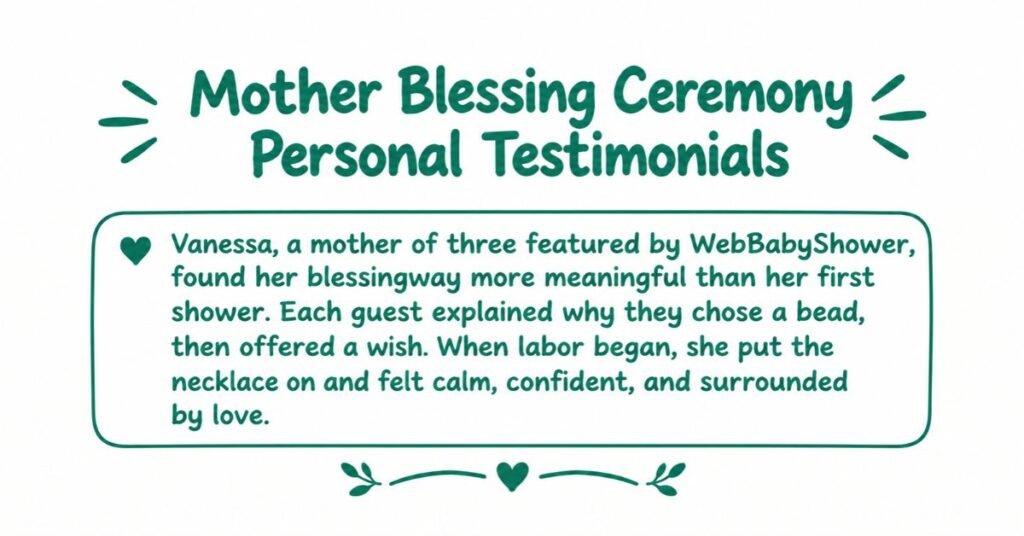
Vanessa, a mother of three featured by WebBabyShower, found her blessingway more meaningful than her first shower. Each guest explained why they chose a bead, then offered a wish. When labor began, she put the necklace on and felt calm, confident, and surrounded by love.
When to Hold a Mother Blessing Ceremony
Timing varies by source, but most land in the third trimester. The Bump suggests about 36 to 38 weeks, Mommybites says around 36 weeks, and WebBabyShower recommends roughly one month before the due date. That window leaves room for preparation without risking an unexpected early arrival.
Choose a calm weekend afternoon when the mother has energy, and consider her health. If her provider flags preterm concerns, schedule earlier or go virtual. Some hosts pick a new moon for fresh beginnings, but practicality matters far more than the lunar calendar.
| Source | Suggested timing | Suggested group size |
| The Bump | About 36 to 38 weeks | 10 to 20 guests |
| Mommybites | Around 36 weeks | 10 to 20 guests |
| WebBabyShower | About one month before the due date | Upper limit of 10 to 15 guests |
| Rachael Rose (Australia) | 34 to 38 weeks | Example circle of 10 women |
Where to Host a Mother Blessing Ceremony
Choose a space that feels intimate, quiet, and safe enough for guests to let their guard down. A living room, a friend’s garden, or a yoga studio works well, comfortably holding 10 to 20 people. Traditionally, the mother’s own home hosts, which feels grounding and familiar.
Skip noisy restaurants and hotel ballrooms. Soft natural light, comfortable cushions, and a circle of chairs matter more than décor. If family lives far away or health concerns limit travel, a virtual circle on Zoom still lets loved ones share readings, blessings, and wishes.
Who Should Host a Mother Blessing Ceremony
Almost any trusted friend or relative can host, and co-hosts are perfectly fine. Many families split roles: one person opens her home, another leads the ritual. Some midwives and doulas facilitate for a fee, which helps first-timers feel confident, though homemade ceremonies often feel deeper.
Pick someone who listens well and keeps the mother’s wishes central. Before inviting anyone, ask what would support her most, whether that is silence, singing, pampering, or postpartum meal pledges. A thoughtful host never pushes spirituality onto a guest of honor who prefers something simple.
Creating a Guest List for Your Mother Blessing Ceremony
Invite people who love and respect the mother and can leave their own birth baggage at the door. Most circles hold 10 to 15 guests, though some stretch to 20. Partners, sisters, and close friends are common, and children need a chaperone who sits outside the ritual.
Invitations for a Mother Blessing Ceremony
Because few guests know what to expect, make the invitation descriptive. Include the date, time, location, RSVP, and what to bring, usually a bead, a poem, or a handwritten wish. Nature-inspired design suits the tone far better than storks, diaper pins, or loud shower themes.
A Mother Blessing Ceremony for Yourself
If friends have already planned a shower, you can still ask for a blessing. Share this guide with the group’s planner, explain why the ritual matters, and offer a smaller circle. Even one person, such as a partner, doula, or sister, can hold meaningful space.
Activities for a Mother Blessing Ceremony
Start by seating everyone in a circle and inviting each guest to share a favorite memory of the mother. Next, let her name fears aloud or write them down, then release them symbolically. Good activities help her feel empowered and supported rather than entertained or put on display.
Popular rituals include a bead necklace worn in labor, a red thread bracelet, a candle lit when labor begins, a foot washing, hair brushing, a flower crown, and belly henna. Choose two or three meaningful rituals instead of crowding the afternoon, so each one lands with weight.
| Ritual | How it works | Why mothers love it |
| Bead necklace | Each guest brings a bead and shares a wish while stringing it | A wearable reminder of support during labor |
| Red thread or yarn bracelets | Thread is passed around the circle and tied on each wrist, then cut after birth | Keeps the whole circle connected until baby arrives |
| Candle lighting | Guests take home a tealight and light it when labor begins | Creates a shared glow across distance |
| Foot washing | Warm water with rose petals or lavender, followed by gentle massage | Soothing, nurturing touch before the big day |
| Dissolving paper blessings | Guests write wishes on dissolving paper and place them in a water jar | A symbolic release of fear and a setting of intentions |
| Fabric blessing squares | Guests write prayers on cloth, later sewn into a quilt | A lasting keepsake for mother and baby |
| Flower crown or belly henna | Guests craft a crown or a henna artist paints the belly | Celebrates her changing body and beauty |
| Village pledges | Guests promise meals, laundry help, or overnight support | Turns good wishes into real postpartum care |
Mother Blessing Ceremony Meditation and Prayers
Most gatherings feel spiritual rather than religious. You might lead a guided meditation on love and support, read a short poem or story, or pass around rose-scented oil so guests can touch their hearts. Whatever resonates with the mother and host will serve the circle best.
Keep the language inclusive. Guests may hold different faiths, so invite them to share a prayer, wish, or affirmation in their own words. When a reading names strength, courage, and trust in her body, it often becomes the phrase she repeats during contractions.
Music for Your Mother Blessing Ceremony
Music helps a group settle. Sing a simple chant together, play hand drums or rattles, or use quiet instrumental tracks in the background. Teach songs once, then invite everyone to join. Printed lyric cards ease the pressure for guests who feel shy about their singing voices.
Gifts for a Mother Blessing Ceremony
Gifts are welcome but never the point. Think symbolic, handmade, and mother-centered: a bead, a poem, a candle, a framed affirmation. Practical postpartum support, like frozen meals or babysitting coupons, often matters more to a tired new mom than another stack of newborn onesies.
If the family needs baby gear, share a registry privately without turning the ceremony into a gift opening. Many guests prefer a pledge: a promised casserole, a night of overnight help, or a laundry visit. These village pledges turn heartfelt wishes into genuine recovery support.
Favors for a Mother Blessing Ceremony
Favors are optional and non-traditional. If you want a thank-you, choose something small and meaningful, like handmade soap, a tea blend, or a tealight guests light when labor begins. A tiny reminder helps them keep sending good wishes long after they leave.
Food and Refreshments for a Mother Blessing Ceremony
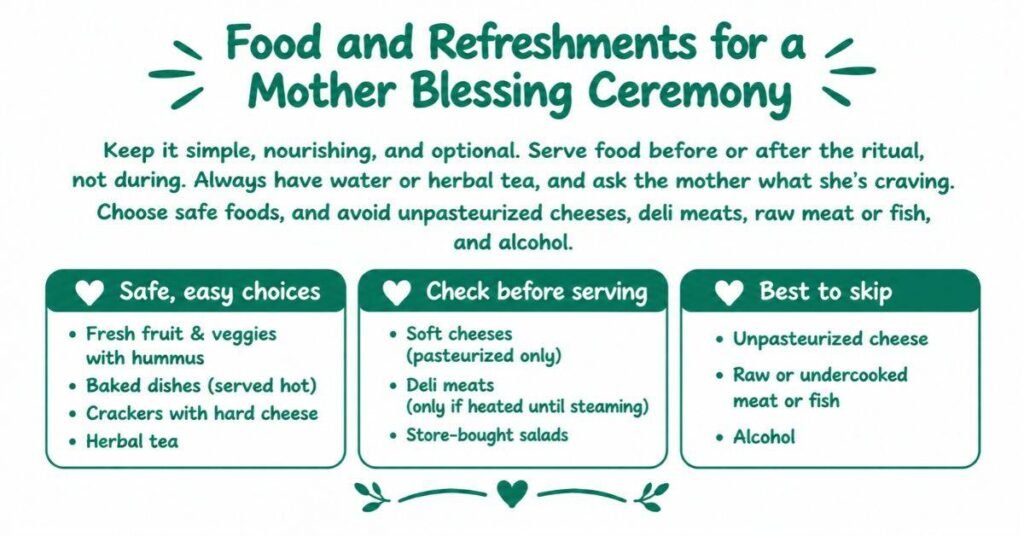
Keep food simple, nourishing, and optional. Serve it before or after the ritual, not during, so nibbling does not interrupt the energy. Always have water or herbal tea available, and ask the mother what she is craving, since heartburn and swelling can change her preferences quickly.
Check pregnancy food safety. The CDC and ACOG advise avoiding unpasteurized soft cheeses and cold deli meats unless heated until steaming, so choose fresh fruit, hummus, vegetables, and baked dishes. A potluck works well when guests know these guidelines before they cook.
| Safe, easy choices | Check before serving | Best to skip |
| Fresh fruit salad, vegetables with hummus, baked dishes served hot, crackers with hard cheese, herbal tea | Soft cheeses (pasteurized only), deli meats (only if heated until steaming), store-bought salads | Unpasteurized cheese, raw or undercooked meat or fish, alcohol |
Decorations for a Mother Blessing Ceremony
Think atmosphere, not décor. Fresh flowers, candles, evergreen sprigs, soft lighting, and a small altar with photos or stones set a gentle mood. Arrange chairs or cushions in a circle so everyone can see the mother. Skip balloons, banners, and baby-themed props entirely.
Mother Blessing Ceremony Checklist
Begin one to two months ahead: choose hosts, date, location, guest list, and rituals with the parents’ input. Send invitations about a month before. Two weeks out, gather candles, beads, and cushions, and confirm food. On the day, lower the lights, light candles, and breathe.
Planning a mother blessing ceremony should feel as peaceful as the event itself. Delegate freely, keep the schedule loose, and remember you cannot do it wrong. When the mother feels honored, supported, and heard, you have created exactly what she needed before her baby arrives.
| When | What to do |
| 1 to 2 months before | Pick hosts and co-hosts, confirm the date and location, finalize the guest list, and choose rituals with the parents |
| 1 month before | Send invitations that explain what to bring, write the opening and closing words, and choose music and readings |
| 2 weeks before | Gather candles, beads, thread, cushions, and altar items; assign food; order any favors |
| Day of | Prepare tea and food, arrange the circle, dim the lights, light candles, and greet guests calmly |
| After the ceremony | Share food, offer foot or hand massage, collect pledges, and send thank-you notes |
Frequently Asked Questions
What is a mother blessing ceremony?
A mother blessing ceremony is an intimate pre-birth gathering that honors the expectant mother through rituals, readings, and shared support. Inspired by the Navajo Blessingway, it prepares her emotionally and spiritually for labor, birth, and postpartum, with the focus on her rather than the baby.
What is the difference between a mother blessing and a baby shower?
A baby shower centers on the baby, gifts, and games. A mother blessing centers on the mother’s transition into parenthood, using a quiet circle, symbolic rituals, and personal blessings. Gifts are minimal, and the atmosphere is reflective and ceremonial instead of festive and themed.
When should you have a mother blessing?
Most mother blessings take place in the third trimester, between roughly 34 and 38 weeks. Many hosts choose about 36 weeks, or one month before the due date, so the mother can use her ritual items during labor without worrying about an early arrival.
What happens at a mother blessing?
Guests gather in a circle and share intentions, readings, stories, and blessings. Common rituals include stringing a bead necklace, tying red thread bracelets, lighting candles, washing feet, and making flower crowns. The ceremony often ends with food, pampering, and pledges of postpartum help.
Who is invited to a mother blessing?
Invite close loved ones who support the mother and respect the ritual. Groups usually include 10 to 20 people, such as sisters, friends, mothers, and mentors. Partners and children can join, though children typically need a separate chaperone during the quieter parts of the ceremony.
Do you bring gifts to a mother blessing?
Gifts are optional and usually symbolic. Guests often bring a bead, a poem, a candle, or a handwritten wish. Practical offerings like freezer meals or babysitting coupons are popular because they support recovery after birth and keep the focus on the mother.
How long does a mother blessing last?
A typical mother blessing runs two to four hours, depending on the rituals and the number of guests. A facilitated ceremony may last about two hours, with extra time built in for arrival, settling, tea, food, and relaxed conversation before and after.
Can you have a mother blessing online?
Yes. A virtual mother blessing works well when loved ones live far away or health concerns limit gatherings. Guests can join by video, read blessings aloud, mail beads or fabric squares ahead of time, and light candles together when the ceremony begins.