

Aaronic Blessing Words: Meaning, Prayer & Bible Verse
The Aaronic blessing words are the beautiful biblical words found in Numbers 6:24–26: “The Lord bless you and keep you.” God gave this blessing to Moses and instructed him to teach Aaron and his sons to speak it over the Israelites. It expresses a prayer for God’s blessing, protection, grace, favor, and peace.
For anyone searching for the Aaronic blessing words, these three verses offer a timeless reminder of God’s care. Whether you want to understand the original scripture, pray over your family, or share an encouraging message with someone you love, the Aaronic blessing provides words of faith, comfort, and hope.
Aaronic Blessing Words in the Bible
The Aaronic blessing comes from the Old Testament book of Numbers. It is also called the Priestly Blessing or Aaronic Benediction because God instructed Aaron and his sons to pronounce it over the people of Israel.
The Aaronic blessing words are more than a beautiful collection of religious words. They express God’s desire to bless, protect, show favor, and give peace to His people. Its three verses are often used in Christian worship, family prayers, and personal devotion.
The passage begins with God’s instruction to Moses:
“Tell Aaron and his sons, ‘This is how you are to bless the Israelites.’” — Numbers 6:23, NIV
This instruction establishes the blessing’s original setting. Aaron was Israel’s first high priest, and the words were given for the people of Israel. The following verses contain the blessing itself, while verse 27 explains that the priests would place God’s name upon the Israelites.
The complete passage is found in Numbers 6:22–27.
Bible Gateway+1
The Aaronic Blessing in Numbers 6:24–26
The following is the complete Aaronic blessing in the New International Version (NIV):
NUMBERS 6:24–26 · NIV
The Lord bless you and keep you;
the Lord make his face shine on you and be gracious to you;
the Lord turn his face toward you and give you peace.
These Aaronic blessing words are frequently spoken as a blessing at the end of Christian worship services. They are also shared during personal prayer, family gatherings, and meaningful moments when someone wants to express faith and encouragement.
The King James Version (KJV) uses the traditional wording:
“The Lord bless thee, and keep thee.” — Numbers 6:24, KJV
The KJV continues with “make his face shine upon thee” and “lift up his countenance upon thee,” ending with the promise of peace. The wording differs slightly across translations, but the central message remains consistent.
Bible Gateway+1
The Meaning of the Aaronic Blessing Words
The Aaronic blessing words express three central desires: God’s provision and protection, His grace and favor, and His peace.
Each phrase carries a meaningful message. Together, the verses offer a picture of a relationship in which God cares for His people, watches over them, and gives them the reassurance of His presence.
The blessing is not simply a request for material success. Its language encompasses spiritual well-being, safety, divine favor, and peace in the midst of life’s challenges.
| Biblical phrase | Simple meaning |
| The Lord bless you | May God provide goodness and favor |
| And keep you | May God protect and preserve you |
| Make His face shine on you | May you experience His favor and presence |
| Be gracious to you | May God show kindness and grace |
| Turn His face toward you | May God look upon you with favor |
| Give you peace | May God grant peace, wholeness, and well-being |
These meanings reflect the passage’s central themes and the biblical context of the blessing.
classic.net.bible.org+1
The Three Parts of the Priestly Blessing

The Aaronic blessing words have a three-part structure. Each part begins with the Lord and expresses a different dimension of divine care.
1. The Lord Bless You and Keep You
The first part of the Aaronic blessing is a prayer for God’s blessing and protection.
To be blessed means to receive goodness, favor, and provision from God. The phrase “keep you” adds the idea of being guarded and preserved. It reminds readers that God’s care involves both giving and protecting.
For someone facing uncertainty, these words offer reassurance. They can be spoken over a child before school, a loved one beginning a new chapter, or a friend who needs encouragement.
2. The Lord Make His Face Shine on You and Be Gracious to You
The second part speaks of God’s shining face and grace.
In biblical language, the image of God’s face shining communicates favor, warmth, and a favorable presence. The word grace points toward kindness and undeserved favor.
This part of the blessing reminds believers that God’s relationship with His people is not limited to meeting physical needs. It also includes His gracious presence and the comfort of knowing they are not forgotten.
3. The Lord Turn His Face Toward You and Give You Peace
The final part asks for God’s favorable attention and peace.
The Hebrew word commonly translated as peace is shalom. Its meaning can extend beyond the absence of conflict to include well-being, wholeness, and a sense of completeness.
These words are especially meaningful during stressful seasons. They offer a prayer for a peaceful heart, restored relationships, and confidence in God’s care.
The three parts work together to express a complete blessing: provision, grace, and peace.
Posen Library+2
The Aaronic Blessing in Hebrew
The Aaronic blessing is known in Jewish tradition as Birkat Kohanim, meaning the Priestly Blessing.
Its Hebrew text is traditionally read from right to left. The following is a commonly presented Hebrew form of Numbers 6:24–26:
יְבָרֶכְךָ יְהוָה וְיִשְׁמְרֶךָ
יָאֵר יְהוָה פָּנָיו אֵלֶיךָ וִיחֻנֶּךָּ
יִשָּׂא יְהוָה פָּנָיו אֵלֶיךָ וְיָשֵׂם לְךָ שָׁלוֹם
English Transliteration
A simplified transliteration can help English speakers become familiar with the sounds:
| Hebrew phrase | Simplified transliteration |
| יְבָרֶכְךָ יְהוָה | Yevarechecha Adonai |
| וְיִשְׁמְרֶךָ | Veyishmerecha |
| יָאֵר יְהוָה פָּנָיו אֵלֶיךָ | Ya’er Adonai panav elecha |
| וִיחֻנֶּךָּ | Vichuneka |
| יִשָּׂא יְהוָה פָּנָיו אֵלֶיךָ | Yisa Adonai panav elecha |
| וְיָשֵׂם לְךָ שָׁלוֹם | Veyasem lecha shalom |
Transliterations vary because Hebrew sounds do not always correspond exactly to English pronunciation. For formal study or worship, readers should consult a reliable Hebrew text and pronunciation resource.
Hebrew Explorer+1
How to Pray the Aaronic Blessing
The Aaronic blessing can be used as a meaningful prayer during personal devotion or family worship.
Begin by reading Numbers 6:24–26 slowly. Reflect on each phrase instead of rushing through the passage. Consider what God’s blessing, protection, grace, and peace mean in your current circumstances.
You may then pray the verses over yourself or someone you love. For example, a parent might speak the blessing over a child before bedtime, or a family might include it in a prayer before traveling.
The important thing is to approach the words with understanding and sincerity. The blessing is rooted in God’s instruction to Israel, and Christians may draw encouragement from its enduring themes of divine care and peace.
A Simple Aaronic Blessing Prayer
Heavenly Father, thank You for Your goodness and faithfulness. Please bless me and keep me in Your care. Let Your face shine upon me and surround me with Your grace. Turn Your face toward me, guide my steps, and fill my heart with Your peace. Help me trust You in every season of life. Amen.
This prayer follows the themes of Numbers 6:24–26 while using original wording rather than presenting itself as a direct Bible quotation.
Aaronic Blessing Words for Family and Loved Ones
The Aaronic blessing can be a thoughtful way to encourage family members and loved ones. Its message is especially meaningful when someone is facing a new beginning, a difficult season, or an important milestone.
Here are a few original blessing messages inspired by the themes of Numbers 6:24–26.
Aaronic Blessing for Children
May the Lord bless you and keep you safe. May His grace guide your choices, His love strengthen your heart, and His peace remain with you wherever you go.
Aaronic Blessing for Parents
May the Lord bless you with strength, wisdom, and rest. May His grace surround you and His peace fill your home. Thank you for the love and care you share each day.
Aaronic Blessing for a Friend
May the Lord bless you in every season of life. May He protect your steps, renew your hope, and fill your heart with peace when life feels uncertain.
Aaronic Blessing for a Wedding
May the Lord bless your marriage and keep your love strong. May His grace guide your relationship, and may His peace fill your home throughout every season of life.
Aaronic Blessing for Someone Facing a Difficult Season
May the Lord keep you close and strengthen you through every challenge. May His grace bring comfort, His presence renew your hope, and His peace guard your heart.
These are devotional adaptations, not direct quotations from scripture. For the exact biblical wording, refer to Numbers 6:24–26.
The Difference Between the Aaronic and Priestly Blessing
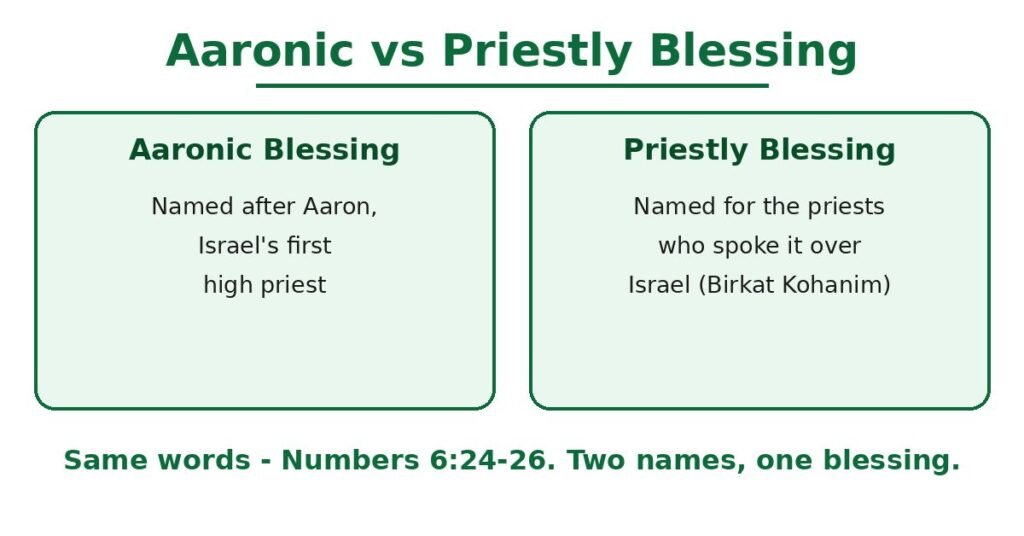
The terms Aaronic Blessing, Priestly Blessing, and Aaronic Benediction generally refer to the same biblical passage.
| Term | Meaning |
| Aaronic Blessing | Named after Aaron, Israel’s first high priest |
| Priestly Blessing | Describes the blessing given by the priests |
| Aaronic Benediction | Common Christian liturgical name for the blessing |
| Birkat Kohanim | Hebrew name for the Priestly Blessing |
| Numbers 6:24–26 | The three verses containing the blessing |
In Jewish tradition, Birkat Kohanim is associated with the descendants of Aaron and the traditional lifting of hands during the blessing. In many Christian churches, the same passage is used as a benediction at the conclusion of worship.
Why the Aaronic Blessing Is Still Meaningful Today
The Aaronic blessing remains meaningful because it addresses needs that people continue to experience: protection, grace, encouragement, and peace.
A person may read it during morning prayer, share it with a family member, or hear it at the end of a church service. Its words provide a familiar reminder of God’s care, especially when life feels uncertain.
The passage also encourages a broader understanding of blessing. Rather than focusing only on success or possessions, it directs attention toward God’s presence, favor, and peace.
For readers of TheBibleBlessings.com, the Aaronic blessing offers an opportunity to connect biblical scripture with everyday faith. Its message can encourage reflection, prayer, and meaningful conversations with loved ones.
The blessing’s enduring message is simple: may God bless you, keep you, show you grace, and give you peace.
I. Frequently Asked Questions About Aaronic Blessing Words
What are the exact Aaronic blessing words?
The Aaronic blessing is found in Numbers 6:24–26: “The Lord bless you and keep you; the Lord make his face shine on you and be gracious to you; the Lord turn his face toward you and give you peace” (NIV)
What is another name for the Aaronic blessing?
It is also called the Priestly Blessing or Aaronic Benediction. In Jewish tradition, it is known as Birkat Kohanim, meaning the Priestly Blessing.
What does “The Lord bless you and keep you” mean?
It expresses a prayer for God’s goodness, provision, protection, and preservation. It reminds believers that God’s care includes both blessing and keeping them safe.
What does the Hebrew word shalom mean?
Shalom is commonly translated as peace. Its meaning can also include well-being, wholeness, and completeness.
Can Christians pray the Aaronic blessing over their families?
Yes. Many Christians use Numbers 6:24–26 in family prayers, personal devotion, and worship services. The blessing can be shared as a meaningful expression of faith and encouragement.
Is the Aaronic blessing the same as the Priestly Blessing?
Yes. Both terms generally refer to the blessing in Numbers 6:24–26. Aaronic refers to Aaron, while Priestly describes its original role in Israel’s worship.