
Blessing Ring: Best Stones, Colors, and Which Finger to Wear
A blessing ring is a meaningful piece of jewelry that can represent faith, gratitude, love, hope, and a personal connection to spiritual beliefs. The best ring depends on your preferred gemstone, favorite color, cultural traditions, and the meaning you want it to express.
Choosing the right ring can feel confusing because different gemstones and colors carry different symbolic meanings. Some people prefer blue sapphire for wisdom, while others choose amethyst for spiritual reflection or emerald for renewal. Understanding gemstone meanings, ring placement, and jewelry quality can help you select a beautiful and meaningful ring.
How to Wear a Blessing Ring
A blessing ring can be worn on either hand, depending on personal preference and cultural or religious traditions. Some people wear it on their ring finger as a reminder of love and commitment, while others prefer the middle finger or little finger for comfort and personal symbolism.
There is no universal rule requiring everyone to wear a blessing ring on a particular finger. Its purpose may be to remember a prayer, celebrate a special occasion, or carry a meaningful message throughout the day. Choose a position that feels comfortable and respects your beliefs.
Wearing a Ring on the Right Hand
The right hand has different symbolic meanings across cultures. Some traditions associate it with action, giving, strength, and commitment. A person may choose this hand when the ring represents a personal promise, faith, or an important life decision.
Wearing a Ring on the Left Hand
The left hand is often associated with wedding and engagement rings in the United States. However, a spiritual ring does not have to follow engagement-ring customs. You can wear it on whichever hand allows you to enjoy it comfortably.
Choosing a Blessing Ring That Resonates With You
The most meaningful blessing ring is one that reflects the wearer’s values. Before choosing a design, consider whether you want to represent faith, peace, hope, gratitude, love, or a special relationship. This simple decision can help narrow down gemstone colors, materials, and engraving styles.
Some people prefer a small gemstone with a simple silver band, while others enjoy detailed gold settings and religious inscriptions. A ring engraved with a prayer or meaningful words can also make a thoughtful gift. The best design is personal rather than expensive.
Choose a Meaningful Inscription
An inscription can make an ordinary piece of jewelry more personal. You might choose a short prayer, a favorite Bible verse reference, a meaningful date, or a few words such as faith, hope, peace, or gratitude.
Consider the Recipient’s Preferences
When buying a blessing ring for someone else, consider their everyday style, favorite metal, and jewelry size. A person who prefers simple accessories may appreciate a delicate gemstone ring, while someone who enjoys traditional jewelry might prefer a more detailed design.
Blessing Ring Colors and Their Symbolic Meanings
Color is one of the easiest ways to give a blessing ring personal meaning. Different gemstone colors have traditional and modern symbolic associations, although these meanings are not universal. A blue stone may remind someone of peace, while green can represent growth and renewal.
The following guide explains common gemstone color associations. These are cultural and personal interpretations, not scientifically established effects. You should select a color because you appreciate its appearance and meaning, rather than believing it guarantees luck, protection, health, or success.
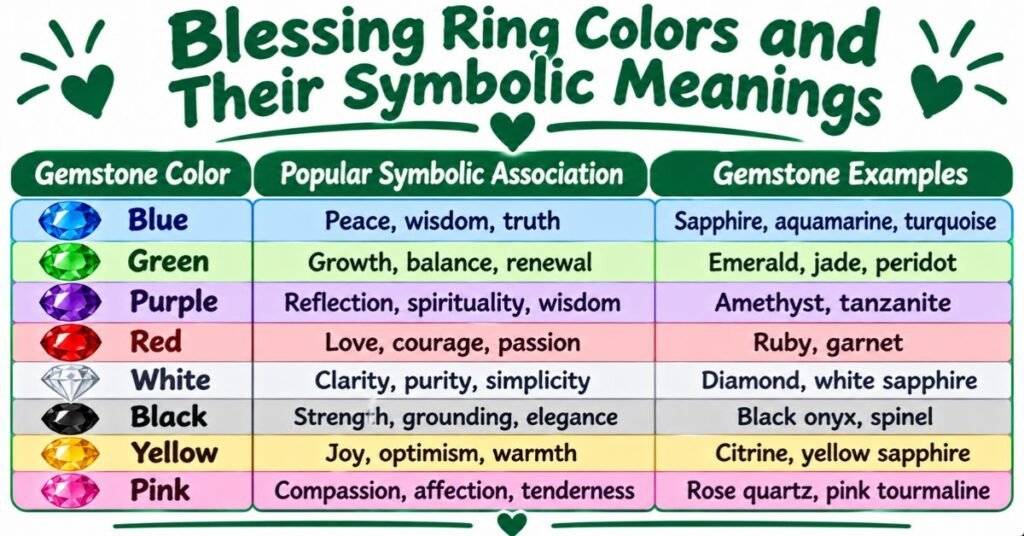
| Gemstone color | Popular symbolic association | Gemstone examples |
| Blue | Peace, wisdom, truth | Sapphire, aquamarine, turquoise |
| Green | Growth, balance, renewal | Emerald, jade, peridot |
| Purple | Reflection, spirituality, wisdom | Amethyst, tanzanite |
| Red | Love, courage, passion | Ruby, garnet |
| White | Clarity, purity, simplicity | Diamond, white sapphire |
| Black | Strength, grounding, elegance | Black onyx, spinel |
| Yellow | Joy, optimism, warmth | Citrine, yellow sapphire |
| Pink | Compassion, affection, tenderness | Rose quartz, pink tourmaline |
Blue Blessing Ring
Blue is a popular choice for someone who associates jewelry with peace, wisdom, and sincerity. Sapphire and aquamarine are attractive options. Their cool shades work beautifully with sterling silver and white gold, creating an elegant everyday design.
Green Blessing Ring
Green gemstones are often associated with nature, renewal, balance, and personal growth. Emerald is a classic choice, while jade and peridot offer different shades and styles. A green ring can be a meaningful gift for someone beginning a new chapter in life.
Purple Blessing Ring
Amethyst is a well-known purple gemstone traditionally associated with calmness, reflection, and spiritual symbolism. Its rich violet appearance makes it suitable for both modern and traditional jewelry. It pairs especially well with silver and understated ring designs.
Red Blessing Ring
Ruby and garnet are popular red gemstone choices. Red traditionally represents passion, love, courage, and vitality. A ruby ring can make a memorable anniversary or milestone gift, particularly for someone who enjoys bold and colorful jewelry.
White or Clear Blessing Ring
White gemstones are associated with simplicity, clarity, and new beginnings. Diamond and white sapphire are common options. Their neutral appearance makes them easy to combine with different outfits, other jewelry, and personal styles.
Black Blessing Ring
Black onyx creates a strong, understated appearance. In modern symbolic jewelry, black stones are often associated with strength, grounding, and confidence. A black gemstone set in sterling silver can create a particularly timeless look.
Best Gemstones for a Blessing Ring
The best gemstone depends on its intended use, appearance, durability, and personal significance. Ruby and sapphire are excellent options for people who want a durable colored gemstone. Amethyst and citrine offer attractive alternatives, while turquoise and onyx are popular for distinctive traditional designs.
It is important to distinguish gemstone symbolism from proven properties. A stone may remind its wearer of a personal prayer or intention, but there is no reliable scientific evidence that wearing a particular gemstone guarantees wealth, prevents misfortune, or changes someone’s destiny.
| Gemstone | Color | Common symbolic meaning | Ring suitability |
| Sapphire | Blue | Wisdom and sincerity | Excellent |
| Ruby | Red | Love and courage | Excellent |
| Emerald | Green | Renewal and growth | Requires extra care |
| Amethyst | Purple | Reflection and calm | Good with care |
| Citrine | Yellow | Joy and optimism | Good with care |
| Turquoise | Blue-green | Tradition and personal expression | Requires care |
| Black onyx | Black | Strength and elegance | Good with appropriate care |
| White sapphire | Clear | Simplicity and clarity | Very good |
Sapphire: A Beautiful Blue Gemstone
Sapphire is a popular option for a meaningful ring because of its rich color and durability. It ranks 9 on the Mohs hardness scale, making it suitable for frequent wear. Blue sapphire is particularly attractive in silver, white gold, and yellow gold settings.
Ruby: A Traditional Red Gemstone
Ruby is a durable red variety of corundum. Its traditional associations include passion, love, and courage. Because it ranks 9 on the Mohs hardness scale, it is a practical choice for someone who wants a colorful ring for regular use.
Emerald: A Classic Green Gemstone
Emerald is valued for its distinctive green appearance and association with nature and renewal. Although its hardness is approximately 7.5–8, many emeralds contain natural inclusions and may be treated with oil or resin. A protective setting and careful handling are advisable.
Amethyst: An Attractive Purple Gemstone
Amethyst is a variety of quartz with a recognizable purple color. It is a popular choice for affordable gemstone jewelry and meaningful gifts. Its hardness is 7, so it can scratch or become damaged more easily than sapphire or ruby.
Turquoise: A Distinctive Traditional Stone
Turquoise has a beautiful blue-to-green appearance and a long history in decorative jewelry. It can be especially meaningful to someone who appreciates traditional craftsmanship. However, it is generally softer and more sensitive to chemicals than harder gemstones.
Which Finger Should You Wear a Blessing Ring On?
The finger you choose should reflect comfort, tradition, and the personal meaning of the jewelry. In modern Western jewelry customs, the ring finger is often connected with marriage and commitment. However, a blessing ring can also be worn on the index, middle, or little finger.
| Finger | Common symbolic association | Suitable design |
| Thumb | Independence and individuality | Simple, wider band |
| Index finger | Confidence and leadership | Statement gemstone ring |
| Middle finger | Balance and stability | Symmetrical ring |
| Ring finger | Love and commitment | Delicate or classic ring |
| Little finger | Individuality and tradition | Signet or slim ring |
These are general jewelry conventions, not universal religious rules. The meaning of a finger can differ according to country, family customs, and religious background.
If the ring has sentimental or religious importance, the wearer’s tradition should take priority over modern fashion symbolism.
Right Hand vs. Left Hand for a Blessing Ring
There is no single hand that is correct for every blessing ring. Some religious and cultural traditions prefer one hand, while others allow different choices. The important point is to understand the particular tradition rather than treating a modern jewelry convention as a universal spiritual requirement.
For example, in some Islamic scholarly discussions, the Prophet Muhammad’s ring is reported to have been worn on the little finger, and scholars discuss both right-hand and left-hand practices. This is different from claiming that a particular gemstone color is required for religious blessing.
What If You Want to Wear It Every Day?
Choose your non-dominant hand if you want to reduce accidental knocks during everyday activities. However, the right setting, gemstone durability, and comfort matter more than the hand itself.
Biblical Meaning of Blessing Rings and Gemstones
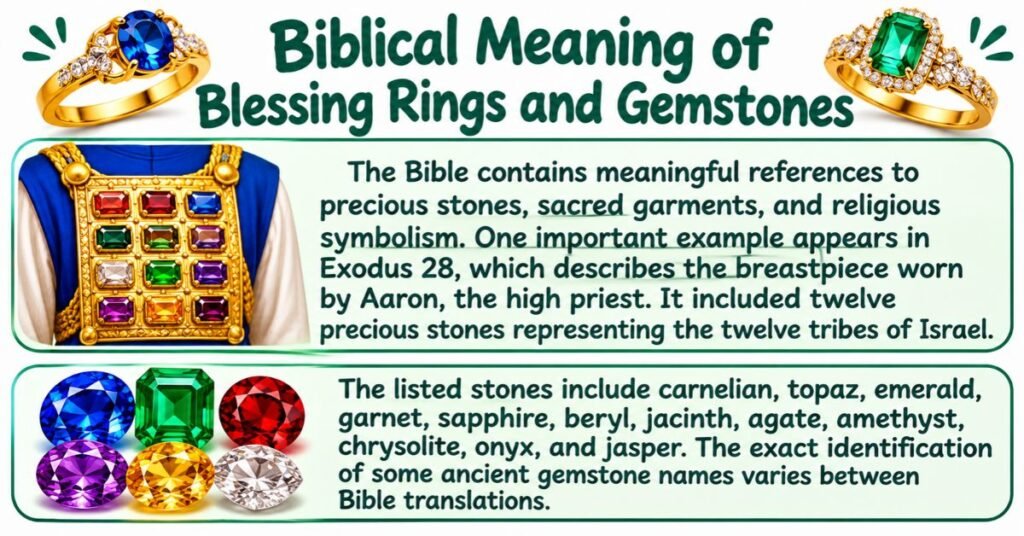
The Bible contains meaningful references to precious stones, sacred garments, and religious symbolism. One important example appears in Exodus 28, which describes the breastpiece worn by Aaron, the high priest. It included twelve precious stones representing the twelve tribes of Israel.
The listed stones include carnelian, topaz, emerald, garnet, sapphire, beryl, jacinth, agate, amethyst, chrysolite, onyx, and jasper. The exact identification of some ancient gemstone names varies between Bible translations.
The Priestly Blessing
The Priestly Blessing is another meaningful biblical connection. It appears in Numbers 6:24–26 and expresses wishes for God’s blessing, protection, grace, and peace.
A ring engraved with a short blessing or a reference to Numbers 6:24–26 can serve as a personal reminder of faith. However, the Bible does not establish a universal rule requiring Christians to wear a gemstone ring.
The Twelve Stones and Their Symbolism
The twelve-stone breastpiece offers an interesting historical inspiration for religious jewelry. Modern jewelry designers sometimes create rings inspired by these stones, connecting gemstones with biblical heritage and the twelve tribes.
It is worth remembering that the ancient breastpiece was a priestly garment, not a prescribed blessing ring. A modern ring inspired by it is a piece of religiously themed jewelry rather than a biblical requirement.
How to Choose the Right Blessing Ring for Someone
A blessing ring can be a thoughtful present for a birthday, anniversary, wedding, graduation, religious celebration, or personal milestone. Instead of selecting a ring only because a gemstone is considered lucky, consider the recipient’s personality, beliefs, favorite colors, and everyday jewelry preferences.
For example, a simple blue sapphire ring may suit someone who appreciates classic jewelry. An amethyst ring might appeal to someone who enjoys purple gemstones, while an engraved silver ring could be meaningful to a person who values religious messages.
Choose the Right Metal
Sterling silver is a popular option for affordable and elegant jewelry. Yellow gold offers a traditional, warm appearance, while white gold and platinum create a more contemporary look. Choose a metal that complements the gemstone and the recipient’s existing accessories.
Select the Correct Ring Size
A meaningful gift can become uncomfortable if the size is incorrect. If possible, check an existing ring that the recipient wears on the same finger. Otherwise, ask a jeweler about professional ring sizing and resizing options.
Think About the Occasion
A ring with an engraved blessing may be appropriate for a graduation or religious celebration. A gemstone ring can make a lovely anniversary present, while a simple band may suit someone who prefers subtle everyday jewelry.
Blessing Ring Materials, Quality, and Care
The quality of a blessing ring depends on more than its gemstone. The metal, setting, craftsmanship, gemstone treatments, and overall construction all influence its appearance and lifespan. A beautiful stone in a poorly made setting may become loose or damaged with regular use.
Before buying, check the metal markings, gemstone description, seller’s return policy, and any available grading or identification report. Ask whether the gemstone is natural, laboratory-grown, imitation, or treated. These distinctions can influence price, value, and care requirements.
How to Protect Your Gemstone
- Remove delicate gemstone rings before cleaning, gardening, or exercising.
- Avoid exposing sensitive stones to household chemicals.
- Store jewelry separately to reduce scratches.
- Clean the ring according to the gemstone’s specific care instructions.
- Have the setting checked periodically by a qualified jeweler.
- Avoid ultrasonic cleaners unless a professional confirms they are suitable.
Which Gemstone Is Best for Everyday Wear?
For frequent use, sapphire and ruby are particularly strong choices because they have high hardness and good durability. Emerald, turquoise, and other more delicate gemstones may require protective settings and additional care. A qualified jeweler can recommend a suitable design based on your lifestyle.
What Is the Best Blessing Ring for You?
The best blessing ring is ultimately the one that combines personal meaning, comfortable design, and reliable craftsmanship. If you love blue, consider sapphire or aquamarine. If green represents growth to you, explore emerald or jade. If you prefer a religious design, consider an engraved prayer or a biblical gemstone-inspired ring.
There is no universally correct color, gemstone, finger, or hand for every wearer. A ring can be a reminder of gratitude, faith, hope, and love without needing to promise supernatural results. Choose a design that respects your beliefs and brings personal meaning to an everyday piece of jewelry.
Frequently Asked Questions About Blessing Rings
1. What Is the Best Stone for a Blessing Ring?
Sapphire, ruby, amethyst, emerald, and turquoise are popular choices. Sapphire and ruby are particularly suitable for everyday rings because of their durability. The best stone depends on your preferred color, personal meaning, and budget.
2. Which Color Is Best for a Blessing Ring?
There is no universally best color. Blue is commonly associated with peace and wisdom, green with renewal, purple with spiritual reflection, and white with clarity. Choose a color that reflects your personal beliefs.
3. Which Finger Should You Wear a Blessing Ring On?
You can wear a blessing ring on any comfortable finger, provided your religious or cultural tradition does not specify otherwise. The ring finger, middle finger, and little finger are common choices.
4. Should a Blessing Ring Be Worn on the Right or Left Hand?
There is no universal rule. Some cultures and religious traditions have specific preferences, while others allow either hand. Consider your personal beliefs and comfort.
5. Is Amethyst Good for a Blessing Ring?
Yes. Amethyst is a popular purple gemstone associated with calmness and spiritual reflection in modern gemstone symbolism. It is suitable for jewelry with reasonable care.
6. Can I Wear a Blessing Ring Every Day?
Yes, provided the gemstone and setting are suitable for regular wear. Sapphire and ruby are durable choices, while emerald, turquoise, and opal need more careful handling.
7. Do Blessing Rings Bring Good Luck?
Some people associate blessing rings with good fortune, hope, and protection. However, there is no scientific evidence that wearing a particular ring or gemstone guarantees luck or prevents harm.
8. Can I Give Someone a Blessing Ring as a Gift?
Absolutely. A blessing ring can be a meaningful gift for birthdays, anniversaries, weddings, graduations, and religious celebrations. Consider the recipient’s beliefs, jewelry preferences, and favorite gemstone.
9. Is There a Biblical Blessing Ring?
The Bible describes precious stones in the high priest’s breastpiece in Exodus 28. Modern jewelry inspired by these stones can represent biblical heritage, although the Bible does not prescribe a specific blessing ring.
10. Which Metal Is Best for a Blessing Ring?
Sterling silver, yellow gold, white gold, and platinum are popular options. The right metal depends on your budget, preferred appearance, skin compatibility, and the gemstone’s setting requirements.
What is the best stone for a blessing ring?
Sapphire, ruby, amethyst, emerald, and turquoise are popular choices. Sapphire and ruby are particularly durable for everyday wear, while amethyst and emerald are valued for their color and traditional symbolic meanings.
Which color is best for a blessing ring?
There is no universally best color. Blue is commonly associated with peace and wisdom, green with renewal and growth, purple with reflection and spirituality, red with love and courage, and white with clarity and purity.
Which finger should you wear a blessing ring on?
You can wear a blessing ring on any comfortable finger. The ring finger is often associated with love and commitment, the index finger with confidence and leadership, and the middle finger with balance, but personal comfort and tradition matter most.
What is the Biblical meaning of a blessing ring?
Exodus 28 describes the breastpiece worn by Aaron the high priest, which included twelve precious stones representing the twelve tribes of Israel. Modern blessing rings draw inspiration from this Biblical heritage.
Should a blessing ring be worn on the right or left hand?
There is no universal rule. Some cultures and religious traditions have specific preferences, while others leave the choice to the wearer.
Can I give someone a blessing ring as a gift?
Absolutely. A blessing ring can be a meaningful gift for birthdays, anniversaries, weddings, graduations, and religious milestones.