

Blessing Tree: Simple DIY Ideas for a Grateful Home
A blessing tree is a decorative arrangement of branches covered with handwritten notes about gratitude, prayers, memories, and hopes for the future. For American families, it can become a meaningful Thanksgiving centerpiece, an easy kids’ craft, or a year-round reminder to appreciate the good things in life.
You do not need expensive supplies or special crafting skills to make one. With a sturdy vase, a few clean branches, paper leaves, and string, you can create a personal display that invites everyone to participate. Each new message adds meaning, turning a simple decoration into a collection of moments worth remembering.
What Is a Thanksgiving Blessing Tree?
A Thanksgiving blessing tree is a small decorative tree made from real or artificial branches. Family members and guests write blessings, thankful thoughts, or encouraging messages on paper leaves and attach them to the branches. The finished display becomes a visual reminder of the people, experiences, and everyday comforts they appreciate. Pair it with these African American Thanksgiving blessings for an even richer holiday tradition.
You may also hear it called a gratitude tree, thankful tree, or Thanksgiving tree. Although designs vary, the purpose is similar: to make gratitude visible and encourage people to share it. Some families use prayers, while others write funny memories, personal achievements, or wishes for the coming year.
The Meaning Behind the Blessing Tree
The tree offers a simple way to represent gratitude and personal growth, echoing the biblical call to give thanks in all circumstances. Roots can symbolize family and stability, branches can suggest new opportunities, and leaves can represent individual memories or blessings. These are creative interpretations rather than universal religious meanings, so families can choose symbolism that fits their beliefs and traditions.
Imagine a family gathering where everyone adds one note before dinner. A child writes about a favorite pet, a grandparent remembers a family trip, and a parent expresses gratitude for a difficult year finally becoming easier. The finished tree holds these different perspectives in one shared display. Research from UC Berkeley’s Greater Good Science Center shows that gratitude practices are linked to greater happiness and well-being.
What You Need to Make a Thanksgiving Blessing Tree
Most blessing tree projects use inexpensive supplies you may already have at home. Choose materials based on the size of your display, the ages of the participants, and whether you want a rustic centerpiece or a colorful craft for children.
| Supply | Purpose | Practical Choice |
| Branches or twigs | Form the tree | Clean, dry fallen branches |
| Vase or container | Holds the branches | Heavy jar, pitcher, or pot |
| Paper or cardstock | Makes the leaves | Cardstock for stronger tags |
| Scissors | Cuts leaf shapes | Adult supervision for children |
| String or twine | Attaches messages | Thin string or ribbon |
| Pens or markers | Writes messages | Washable markers for kids |
| Pebbles or sand | Stabilizes branches | Enough to prevent tipping |
You can buy decorative branches at a craft store or collect fallen branches from your yard where permitted. Avoid cutting live branches without permission. Clean collected materials, let them dry, and check for insects or sharp edges before bringing them indoors.
Step-by-Step: How to Assemble Your Thanksgiving Blessing Tree
Making the tree is straightforward, even if you have never completed a DIY decoration. Prepare the branches and tags before your guests arrive so people can participate without waiting for supplies. A stable base and easy-to-reach writing station will make the activity more enjoyable.
Step 1: Choose Your Spot
Place the tree on a side table, entryway console, dining-room sideboard, or craft table. Choose a location with enough space for people to write and hang leaves. Keep the arrangement away from busy walkways, open flames, and places where pets or small children could knock it over. As a living house blessing, it invites every guest to read — and add — a note of thanks.
Step 2: Arrange Your Branches
Set the branches inside a sturdy container and add pebbles, sand, or another suitable filler to hold them upright. Adjust the branches so their shapes spread naturally and leave enough room to hang notes. Before decorating, gently test the arrangement to make sure it does not tip when touched.
Step 3: Prepare the Leaves
Draw simple leaf shapes on paper or use a printable template. Cut enough leaves for everyone to participate, with a few extras for late arrivals. Punch a small hole near the top and add string if you want hanging tags. Cardstock usually holds its shape better than thin printer paper.
Step 4: Set Up a Writing Station
Put blank leaves, pens, markers, and spare string in a small basket beside the tree. Add a short invitation such as, “Write one thing you appreciate and hang it on a branch.” Showing one completed example can help guests understand the activity without a long explanation.
Step 5: Add Leaves as the Day Unfolds
Invite guests to write whenever they have a moment. They can add a note before dinner, after dessert, or while chatting with relatives. If you have a large group, place extra supplies nearby so people do not have to wait for their turn.
Step 6: Share the Blessings
After the meal, invite everyone to read a few notes aloud if they feel comfortable. Some families enjoy guessing who wrote each message, while others prefer to keep their notes private. You can also save the leaves in a labeled envelope or keepsake jar to revisit next year.
What to Write on Blessing Leaves
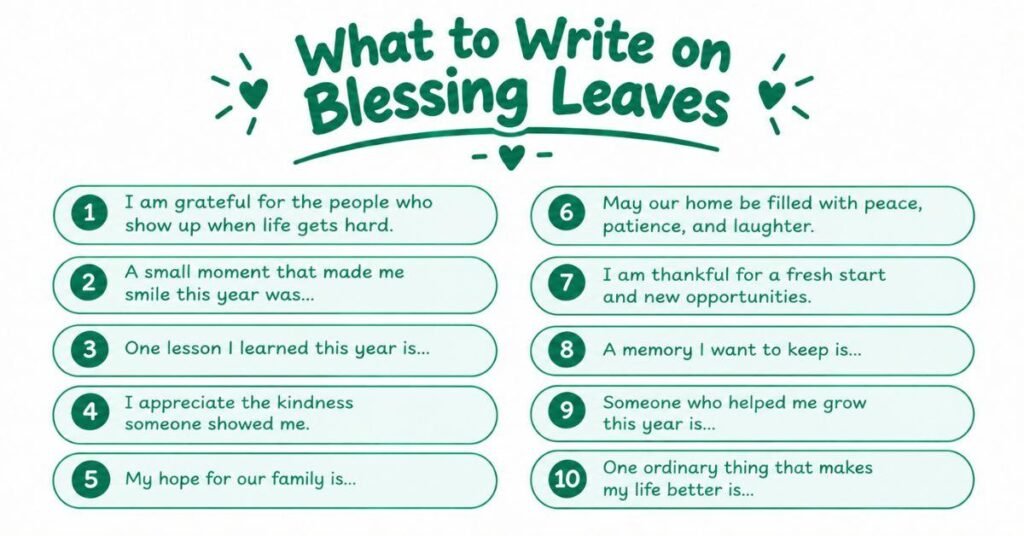
The hardest part for some people is choosing what to write. A prompt makes it easier, especially for children or guests who do not enjoy speaking in front of a group. Keep the messages short and personal; a single sentence can be more meaningful than a long speech.
Here are ready-to-use examples:
- I am grateful for the people who show up when life gets hard.
- A small moment that made me smile this year was…
- One lesson I learned this year is…
- I appreciate the kindness someone showed me.
- My hope for our family is…
- May our home be filled with peace, patience, and laughter.
- I am thankful for a fresh start and new opportunities.
- A memory I want to keep is…
- Someone who helped me grow this year is…
- One ordinary thing that makes my life better is…
For a faith-centered gathering, guests can write a prayer or a blessing for another person. For a secular gathering, use gratitude statements, memories, or hopes. There is no single correct format; the goal is to create a welcoming activity that suits the people taking part.
Kid-Friendly Variations of the Blessing Tree
Children can help make paper leaves, choose colors, decorate tags, and write or dictate short messages. Younger children may draw a favorite toy, family member, or happy memory instead of writing a sentence. Older children can use prompts about friendship, kindness, school, accomplishments, or something new they learned.
For a classroom, give each student one leaf per day during the week before Thanksgiving. Display the finished tree on a bulletin board or in a common area, following school rules for student names and personal information. In a family setting, let children add a leaf whenever they notice something they appreciate.
Blessing Tree Ideas for Teens & Adults
Older participants may prefer thoughtful prompts rather than basic “What are you thankful for?” questions. Invite them to write about a challenge they overcame, a relationship they value, a goal they are pursuing, or a moment when someone offered unexpected support. These topics can create meaningful conversations without requiring anyone to share private details. For ready-made inspiration, browse these daily blessing quotes.
For a more refined design, use simple paper tags, consistent lettering, and a neutral vase. You can attach a small photo to a tag or write a memory on the reverse side. If the group is large, offer a choice between sharing notes aloud and keeping them on the tree for people to read privately.
Keep the Blessings Rolling: Using Your Blessing Tree After Thanksgiving
Your tree does not have to come down when Thanksgiving ends. Remove the autumn leaves and replace them with winter wishes, holiday messages, or intentions for the new year. This approach lets you reuse the same branches and container while giving the decoration a fresh purpose for each season.
At the end of the year, store the notes in a dated envelope or keepsake jar. When Thanksgiving returns, read a few of the old messages and notice which hopes came true, which relationships grew stronger, and which small moments still bring a smile. The ritual can become a family tradition without requiring a new craft every year.
Themes for Your Blessing Tree
A theme helps the tree feel coordinated without making the project complicated. Choose colors and materials that complement your home, holiday table, or event. A small display can be just as meaningful as a large centerpiece, so focus on a design that is easy to maintain and gives people enough room to add their messages.
Rustic Woodland Tree
Use natural branches, kraft-paper leaves, twine, and a simple glass jar. This style works well with farmhouse decor and a casual Thanksgiving table. You can leave the paper plain or write messages with a dark marker for a simple, natural appearance.
Elegant Minimalist Tree
Choose a clean container, carefully cut tags, and restrained colors. This option fits smaller rooms and modern interiors without overwhelming the space. Keep the branches evenly arranged and leave enough space between tags so the messages remain easy to read.
Kid-Friendly Thankful Tree
Offer brightly colored paper, washable markers, and simple stickers. Let children decorate the leaves while keeping the branches and container secure. You can choose a different paper color for each family member or use separate colors for gratitude, wishes, and happy memories.
Sentimental Memory Tree
Combine gratitude notes with small photographs or dated memory tags. This style is especially useful for reunions, anniversaries, and end-of-year family gatherings. Guests can write a favorite memory on one side of a tag and add a personal message on the other.
Blessing Tree Table Styling Ideas
A blessing tree can serve as a centerpiece, but it should not block conversation or take up too much table space. A smaller tree often works best for a crowded dining table, while a taller arrangement can sit on a nearby console where guests can add notes before or after the meal.
For a Thanksgiving centerpiece, coordinate the container with your existing table linens and decorations. For an entryway tree, place a small bowl of tags and pens beside it. For a kids’ craft table, keep scissors and small supplies supervised and make sure the base is heavy enough to remain upright.
Troubleshooting: What to Do If Your Tree Looks Sparse or Lopsided
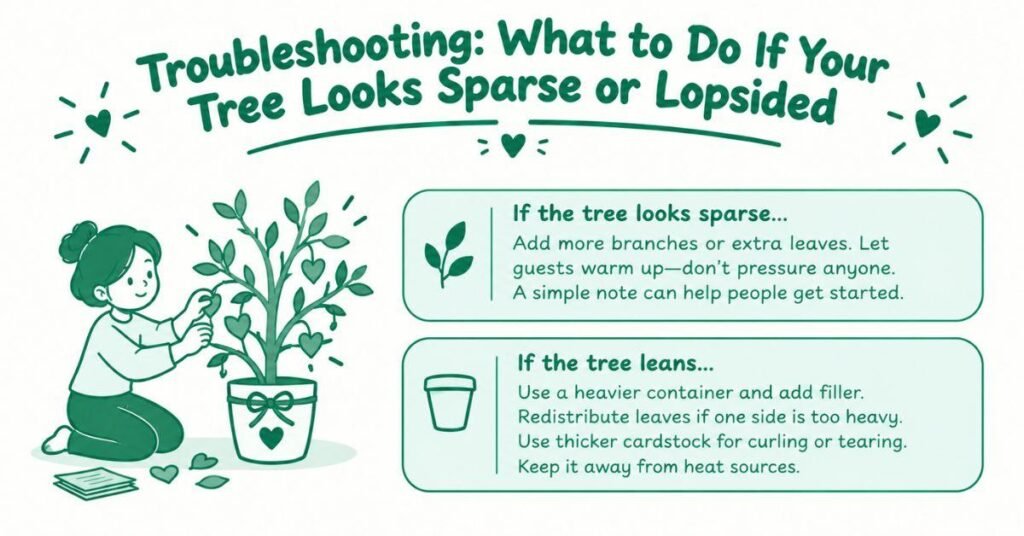
If the tree looks empty, add a few more branches or prepare extra blank leaves. Guests may need time to warm up to the activity, so do not pressure anyone to participate. A simple example note can encourage people to get started without making the gathering feel like a formal exercise.
If the tree leans, use a heavier container and add more filler around the base. Redistribute the leaves if one side becomes too heavy. If paper leaves curl or tear, switch to thicker cardstock. Keep the arrangement away from candles, fireplaces, and other heat sources to reduce fire risk.
What is a blessing tree?
A blessing tree is a decorative arrangement of real or artificial branches in a sturdy vase, covered with handwritten paper leaves noting things you’re thankful for. It serves as a visual reminder of gratitude for your home — especially around Thanksgiving, but it works year-round.
What do you write on blessing tree leaves?
Write specific blessings: people you’re grateful for, favorite memories, lessons learned, hopes for your family, or short prayers. Prompts like “Today I’m thankful for ___” help kids and guests get started.
What supplies do I need to make a blessing tree?
You need branches or twigs, a sturdy vase or container, pebbles or sand to stabilize the base, paper or cardstock for leaves, scissors, string or twine, and pens or markers. Most supplies are inexpensive or already in your home.
How do I fix a blessing tree that looks sparse or leans?
Add more branches or extra blank leaves for fullness, use a heavier container with plenty of pebbles or sand around the base, and redistribute the leaves so one side isn’t overloaded. Thicker cardstock also helps leaves hold their shape.
How can kids participate in a blessing tree?
Give kids simple fill-in-the-blank prompts like “Today I’m thankful for ___,” let them decorate leaves with stickers and bright markers, or allow them to draw pictures instead of writing. Even toddlers can dictate a blessing for an adult to write.
When should I put up a blessing tree?
Blessing trees are popular around Thanksgiving, but they work year-round. After the holidays, swap autumn leaves for winter wishes, Valentine notes, spring intentions, or Christmas tags to keep the blessings rolling all year.
If this project has you thinking about the spiritual atmosphere of your home, take the next step and read our guide to blessing a house — simple room-by-room prayers, Bible verses, and tips for inviting God’s peace into every corner.